In late 2025, Washington put a name on something that has been building quietly for years: a full-spectrum push to fuse frontier AI, exascale computing, and quantum technologies into national capability. The “Genesis Mission” is not just a science program; it is a competitiveness program with explicit timelines, institutional ownership, and private-sector alignment.
For central banks and finance ministries, the immediate question is not whether quantum computers will price derivatives faster or discover new materials. It is simpler and sharper: does quantum introduce an additional risk to monetary sovereignty?
It does, because monetary sovereignty is increasingly enforced through digital trust. When the rails of money become more digital, sovereignty becomes less about printing notes and more about who can guarantee secure settlement, identity, and continuity under stress.
The sovereignty concept that matters in 2026
Monetary sovereignty is often described as the state’s ability to issue its currency, conduct monetary policy, and act as lender of last resort. In the 2020s, there is a second layer that is just as decisive:
Operational sovereignty: the ability to operate the monetary system: payments, settlement, custody, and issuance, without strategic dependence on external actors that can deny service, compromise security, or impose conditions.
Quantum technologies raise the stakes precisely here.
Risk channel 1: A cryptographic cliff turns "trust in money" into a national security variable
Modern money runs on cryptography. Interbank messaging, RTGS, instant payments, card networks, government debt auctions, core banking authentication, secure hardware modules, and even audit trails rely on public-key cryptography as a root-of-trust.
A sufficiently capable quantum computer threatens commonly deployed public-key schemes (notably RSA and elliptic-curve cryptography). The risk is not only the day an adversary can break keys in real time; it is also the "collect now, decrypt later" logic, capturing traffic today that becomes readable when quantum capability matures. The closer credible timelines get, the more valuable long-lived secrets become as targets.
The Genesis framing matters because it makes the timeline politically legible. In the War on the Rocks piece, the authors argue that a fault-tolerant, scientifically useful quantum computer by 2028 is within reach. The Department of Energy’s own public messaging also centers the objective of delivering a fault-tolerant quantum computer capable of meaningful scientific calculations.
Sovereignty implication: if markets and citizens begin to suspect that a country’s payment and settlement stack can be selectively compromised, monetary policy credibility can remain intact on paper while confidence in the unit’s usability erodes in practice. That erosion accelerates the very dynamics central banks fear most in crisis: rapid digital flight, liquidity hoarding, and “safety migration” to other units or rails.
This is why the defensive side is no longer speculative. NIST finalized its first post-quantum cryptography standards in 2024 - ML-KEM for key establishment, and ML-DSA / SLH-DSA for signatures—explicitly to support migration away from quantum-vulnerable primitives.
The strategic point is uncomfortable but clear: if your monetary system’s cryptographic foundation is behind the curve, your sovereignty premium rises, even if nothing has been "broken" yet.
Risk channel 2: Quantum readiness becomes an infrastructure moat- and infrastructure moats become leverage
In the pre-digital era, monetary sovereignty was safeguarded by domestic control of note issuance and banking supervision. In the digital era, the “hard assets” are different:
-
validated cryptographic standards and certified implementations
-
key management sovereignty (HSMs, root certificate infrastructure, secure enclaves)
-
resilient data centers and incident response at national scale
-
trusted cross-border settlement gateways
If quantum pushes the world into a rapid cryptographic re-platforming, countries that move first gain an invisible but powerful advantage: they become the default providers of trusted rails.
That creates an "infrastructure import" problem for smaller economies. When a jurisdiction cannot realistically fund or execute a national crypto-agility program across banks, public services, and core market infrastructure, it is tempted to outsource: cloud-based key management, foreign security stacks, foreign settlement providers, foreign digital-wallet ecosystems. Each outsourcing step may be rational operationally, yet it incrementally converts sovereignty into dependency.
The Genesis Mission’s broad partnership model, mobilizing major technology firms and research institutions around a coordinated national objective: signals that the United States is trying to industrialize that advantage.
Risk channel 3: A safer digital unit travels faster - stablecoins and "digital dollarization" get a second wind
Monetary sovereignty is also a network game. People use the unit that is:
-
accepted everywhere,
-
stable,
-
easy to move,
-
hard to lose, and
-
hard to counterfeit.
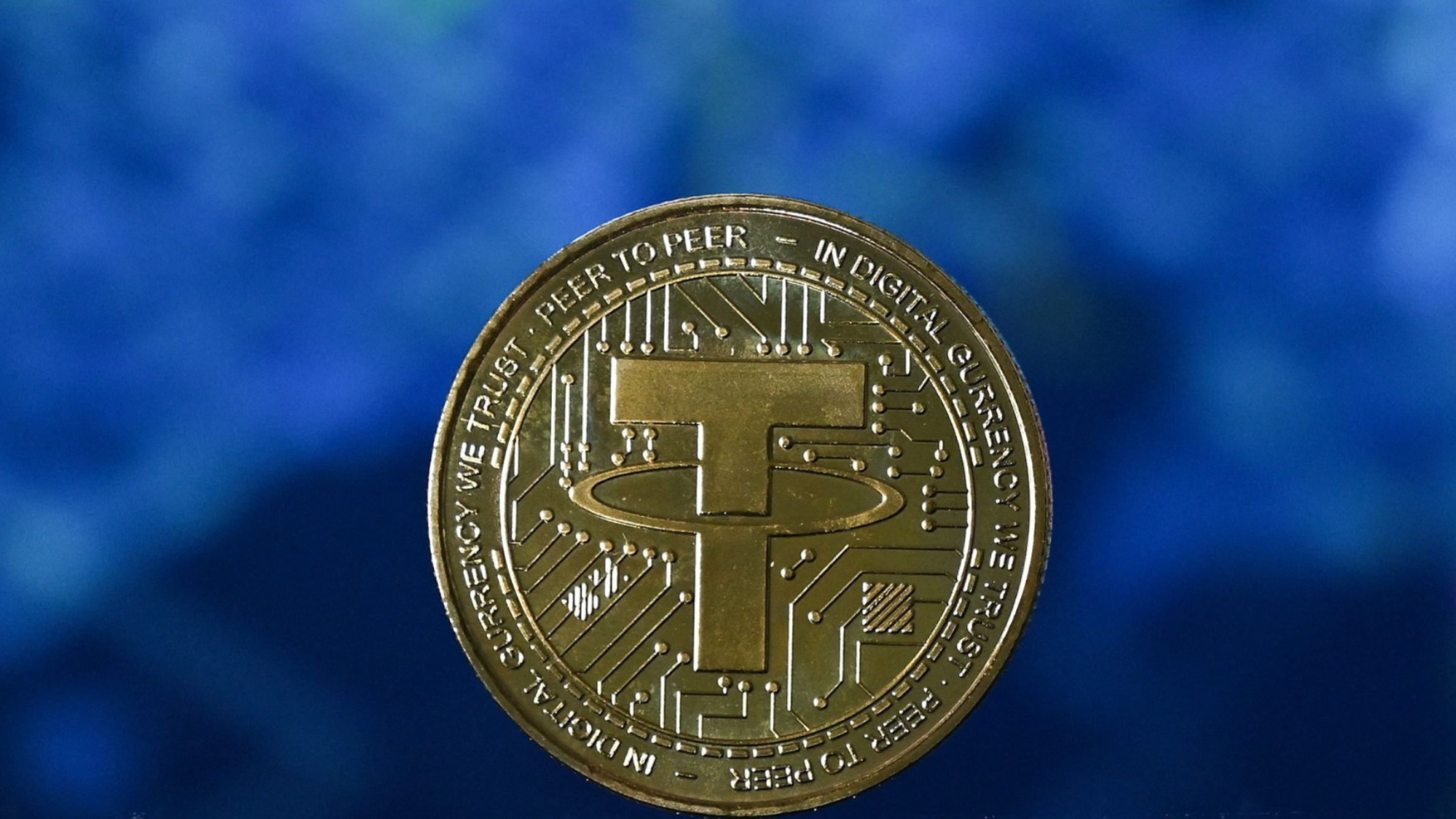
Stablecoins are a direct challenge to weaker currencies because they package foreign currency exposure into a consumer-friendly wrapper. Recent central-bank research and public commentary increasingly treats foreign-currency stablecoin adoption as a sovereignty risk, especially where it can sidestep domestic FX rules and weaken monetary transmission.
By late 2025, European central bank commentary was citing rapid growth in stablecoin usage and concentration, with most stablecoin value still denominated in U.S. dollars.
Quantum does not “cause” stablecoins. But it can amplify the substitution channel in two ways:
-
Trust upgrade: if the leading jurisdictions execute post-quantum migration faster, their digital money ecosystem can market itself - implicitly or explicitly - as safer and more future-proof.
-
Rail dominance: if cross-border payment rails consolidate around a few “quantum-secure” compliance/security stacks, currency choice rides on rail choice.
The IMF has recently reiterated that safeguarding monetary sovereignty is a core policy objective when jurisdictions confront rapid growth in crypto-asset usage and stablecoin penetration.
The risk is not symmetric: majors vs. small open economies
Major reserve-currency issuers (USD, EUR, etc.)
Quantum is less likely to remove sovereignty outright. The bigger risk is a cost shock: forced, rapid re-platforming of cryptography across the entire financial system, plus higher geopolitical value placed on incident response and trusted infrastructure. The penalty for executing the transition poorly is reputational and financial, but not necessarily existential.
Small open economies and high-inflation jurisdictions
Quantum-era infrastructure advantage can translate into a more direct sovereignty erosion. If households and firms already prefer to store value in foreign units, then a perception that foreign digital money is safer and easier to use can accelerate currency substitution. Under stress, the shift can become abrupt.
In practical terms: the quantum risk is an accelerant. It increases the speed at which existing fragilities convert into de facto dependence.
What "defending monetary sovereignty" looks like in the quantum transition
This is not solved by a single "post-quantum upgrade". It is a program with governance, deadlines, and auditability.
-
Crypto-agility as a supervisory requirement
Banks and systemically important FMIs need the ability to rotate algorithms, certificates, and keys without multi-year change cycles. Treat it as resilience, not as "IT modernization". -
Prioritized migration of the monetary core
Start with the irreducible trust anchors: central bank systems, RTGS/instant rails, securities settlement, government debt issuance, identity layers, and key custody infrastructure. Align to standardized PQC primitives (and validation regimes), not vendor promises. -
Key material sovereignty
Even when leveraging hyperscale infrastructure, avoid outsourcing the ultimate root-of-trust. If a state cannot credibly control its keys, it cannot credibly control its rails. -
A competitive public alternative to private foreign money
Where stablecoins are already meaningful in domestic payments, containment is rarely enough. The system needs an alternative that is usable, regulated, and interoperable, otherwise substitution wins by convenience. -
Cross-border strategy: reduce “rail capture” risk
If cross-border settlement becomes dominated by a few quantum-secure stacks, smaller jurisdictions need multi-rail interoperability and diversification, technical and legal, to avoid single points of geopolitical leverage.
Conclusion: the sovereignty threat is real, but it arrives through infrastructure
The Genesis Mission narrative is a reminder that quantum is moving from laboratory prestige to state capacity. Monetary sovereignty will not collapse because a quantum machine factors a number on a certain day. It will weaken if a country’s citizens and institutions conclude, gradually or suddenly, that the safest, most reliable, most usable money is issued and secured elsewhere.
In 2026, the real monetary sovereignty question is therefore operational: Can your country keep its monetary system secure, trusted, and modern without importing the foundations of trust from outside its jurisdiction?