Iran’s Paya (Tolou-3) satellite and the real meaning of sovereignty in 2026
Iran’s Paya (Tolou-3) Earth-imaging satellite is being sold as a technology milestone: a heavier platform, better sensors, and sharper usable imagery.
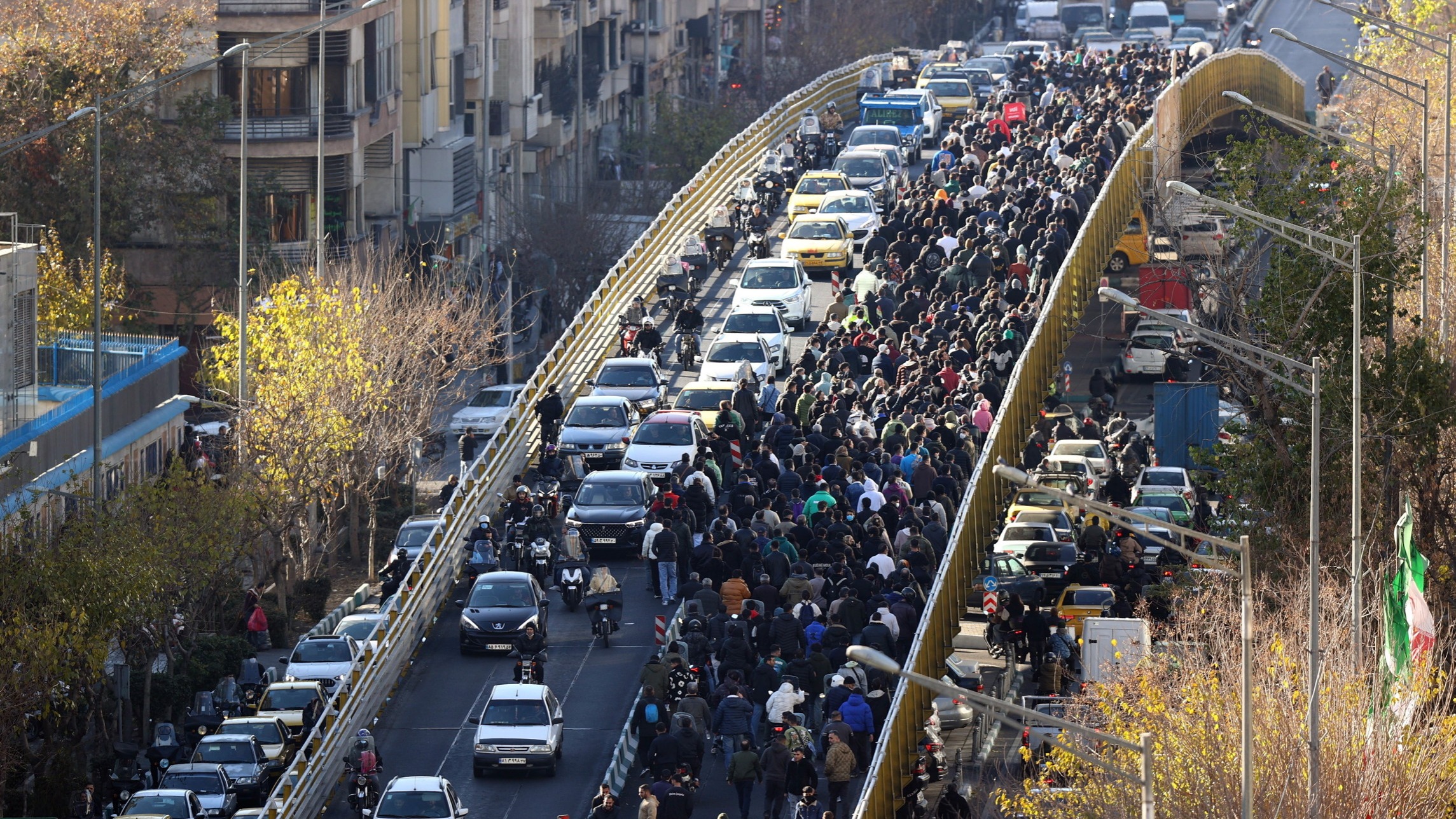
But the timing is what gives the story its weight. Iran is trying to reassert state capacity while the rial is under severe stress, inflation is biting, and currency credibility is contested on the street. In this environment, any strategic investment that improves the government’s ability to measure, anticipate, and manage shocks becomes relevant to money, whether or not it looks like a monetary instrument.
A satellite camera is not a central bank tool. Yet in fragile currency environments, observability becomes part of monetary sovereignty.
What Paya (Tolou-3) adds to the “sovereignty stack”
According to Iranian reporting, Paya is a mini-satellite of roughly 150 kg, carrying two imaging sensors that can produce about 5-meter resolution black-and-white imagery and 10-meter color imagery, with additional AI-driven processing claims aimed at improving the effective utility of images.
The satellite was launched alongside Kowsar and Zafar-2 from Russia’s Vostochny Cosmodrome, and has been described as part of a package intended for environmental monitoring, agriculture, and water resource management.
That "civil" framing is not cosmetic. Earth observation delivers a specific kind of national leverage:
-
Earlier signals for food inflation: crop health, drought severity, and irrigation stress show up in imagery before they show up in prices.
-
Faster response to infrastructure degradation: floods, land subsidence, and construction progress can be tracked at scale.
-
Independent verification: the state is less dependent on foreign platforms and commercial licensing for territorial data.
In stable economies, this is about productivity and planning. In stressed economies, it is also about credibility.
Iran’s monetary status, explicitly
To understand why a satellite can be a monetary story, you need to be direct about Iran’s current monetary condition.
The rial’s confidence problem is acute
In late December 2025, reporting placed the open-market exchange rate at around 1,390,000 rials per US dollar, with street protests and business closures tied to the cost-of-living squeeze.
Inflation is high enough to rewrite household behavior
The same reporting cited inflation around 48.6% (October 2025) and a macro outlook that remains constrained.
When inflation persists at those levels, people do what rational economic agents always do: they stop using the local unit as a store of value and begin “thinking” in alternatives - typically the dollar, gold, property, or increasingly digital proxies.
Monetary governance is under visible strain
The central bank governor, Mohammad Reza Farzin, resigned amid the currency slide, with Abdolnaser Hemmati reported as the incoming replacement.
A leadership change does not automatically fix credibility. It signals that credibility is the scarce resource.
A multi-rate FX regime creates distortions
Iran’s FX system has long operated with multiple exchange rates, including managed mechanisms such as NIMA alongside an open/parallel market, creating a gap between policy prices and lived reality, and inviting arbitrage incentives.
Sanctions remain a structural constraint
Reuters explicitly ties today’s currency and inflation stress to the reimposition of U.S. sanctions in 2018, which reduced oil export capacity and access to hard currency.
In practice, sanctions turn monetary sovereignty into an operational challenge: not just "can you issue money", but "can you keep the real economy functioning under constraint".
Why Earth observation matters when the currency is weak
Monetary sovereignty is often explained as the state’s ability to issue and manage its currency. In the real economy, sovereignty is experienced differently: as stability in essentials.
A currency collapses socially long before it collapses technically. The breaking point is when households and firms internalize that prices are unreliable, supply is uncertain, and official data is not trusted.
That is where Earth observation becomes relevant:
1) It reduces the surprise component of inflation
Food inflation is one of the fastest ways to destroy confidence because it hits daily life. If a government can see drought stress early, forecast yield impacts, and plan imports or targeted relief before shortages become political panic, it can reduce the amplitude of price spikes.
2) It improves the targeting of scarce fiscal resources
When budgets are strained, universal subsidies become blunt instruments. Better territorial data enables more targeted responses: by region, crop type, water basin, or infrastructure corridor - reducing leakage and improving outcomes per unit of spending.
3) It strengthens credibility through verification
In contested environments, "trust me" stops working. Governments need mechanisms that verify conditions and outcomes, especially when the population is skeptical and market actors price in pessimism.
In short: better measurement improves the odds of less chaotic inflation, and less chaotic inflation reduces the incentive to abandon the domestic unit.
The hidden monetary layer: currency substitution is going digital
Iran’s monetary problem is not only inflation; it is also the changing landscape of alternatives.
Institutions like the IMF have explicitly warned that stablecoins can accelerate currency substitution, bypass capital controls, and fragment domestic payment systems, risks that are sharper in countries with weak monetary conditions.
This matters because the “competition” for a weakening currency is no longer limited to physical dollars. It can also be:
-
USD-denominated stablecoins
-
offshore payment channels
-
informal value-transfer networks
-
asset dollarisation through real estate and hard goods
When households can shift value into digital dollar proxies quickly, it becomes harder for a central bank to re-anchor expectations. Monetary sovereignty, in practice, becomes a race between stabilization and substitution.
A practical framework: the sovereignty stack
A useful way to connect a satellite program to currency credibility is to treat sovereignty as layered:
-
Data sovereignty: can you measure territory, production, and risk without external permission?
-
Operational sovereignty: can you keep logistics, food, water, and energy systems resilient enough to prevent repeated shocks?
-
Financial sovereignty: can you route payments, manage FX, and prevent systemic leakage?
-
Monetary sovereignty: does the public accept the currency as a usable unit of account and store of value?
Paya (Tolou-3) sits in the first layer. It does not "fix" the rial. But it strengthens the infrastructure that makes monetary stabilization more plausible: the state’s ability to see reality early and act before shocks become price spirals and social unrest.
What to watch next
If this satellite story is to become more than symbolism, three follow-ons matter:
-
Institutional uptake: imagery must feed real decision systems (agriculture planning, water policy, import scheduling, disaster response).
-
FX credibility reform: narrowing the gap between managed and parallel markets reduces arbitrage and improves trust in policy signaling.
-
Payments competition: as digital currency substitution rises, credible domestic payment and savings options matter as much as interest-rate announcements.
The modern lesson is uncomfortable but clear: currency strength is not just a central bank narrative. It is an outcome of whether the state can competently manage the real economy under pressure.
Sometimes the first step toward monetary sovereignty is a camera pointed at Earth.