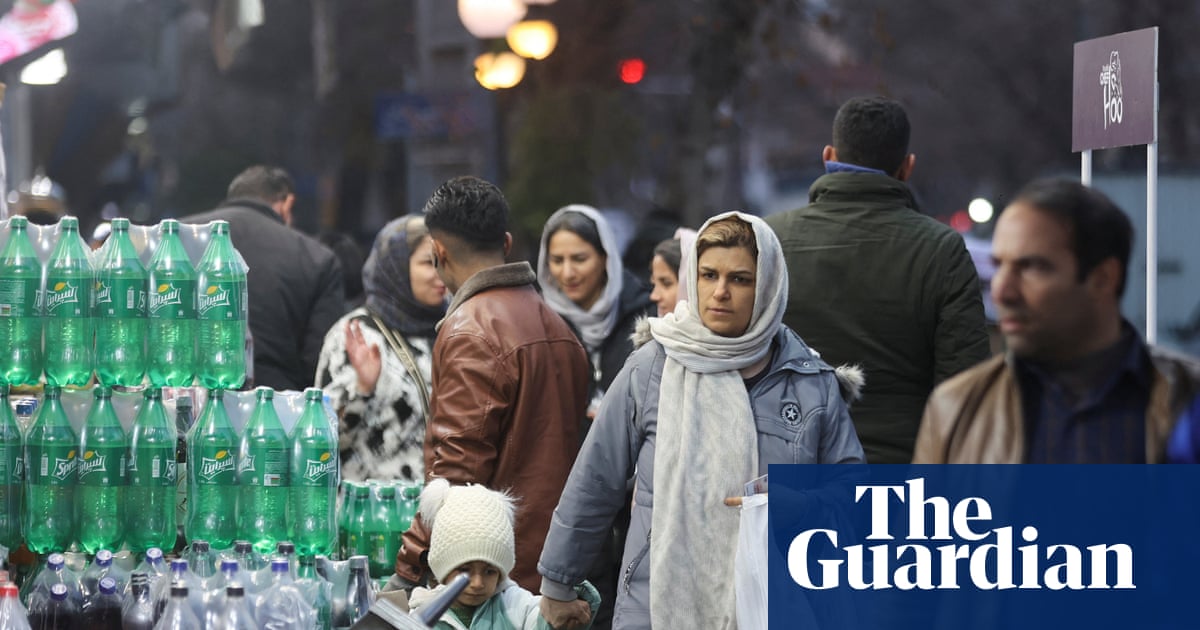
In recent weeks, Iran has returned to a pattern typical of systemic crises: a currency losing credibility, prices accelerating, protests that begin as a cost-of-living revolt and then acquire overt political meaning, and a state response that oscillates between risky concessions and repression. In this context, one detail—still not verifiable, but revealing as a signal—has entered the public narrative: the claim that Supreme Leader Ali Khamenei has a contingency “Plan B” to flee to Russia if domestic order truly fractures (for example, if parts of the security apparatus begin to defect).
It is important to keep the layers separate. The “escape plan” story is reporting based on non-public intelligence sourcing; the economic-social stress, by contrast, is widely observable and consistently described across multiple international outlets.
The trigger: currency, inflation, and collapsing confidence
The protests gained traction through a sensitive node of the Iranian economy: the bazaar and the merchant class—an immediate “sensor” for the break between prices and incomes. When a currency loses credibility, it rarely does so gently. Expectations shift faster than policy can respond: households front-load purchases, firms reduce supply, inventories are hoarded, and parallel markets become the real price discovery mechanism. In that environment, inflation is no longer just a statistic; it becomes a collective psychological state.
That is the core macro story: the rial’s weakness and the perception of economic mismanagement under sanctions have combined into a feedback loop where each attempt at short-term stabilization risks reinforcing the underlying mistrust.
“Plan B to Russia” as a signal: more geopolitics than gossip
Even if treated cautiously as an unconfirmed claim, the story matters because of what it implies: Russia is framed as a plausible rear base. This aligns with a real strategic evolution in Iran’s external posture over recent years—an “eastward” orientation that seeks insulation from Western leverage by relying more on relationships and platforms perceived as less conditional and less exposed to U.S./EU pressure. In that broader frame, the notion that an ultimate contingency would point to Moscow rather than a Western capital is not random; it reflects how Iranian decision-makers think about risk, exposure, and political reliability.
The analytical key: economic sovereignty as doctrine (and constraint)
This is where your sentence becomes the thesis of the article:
Iran shows a structural political orientation to preserve economic sovereignty by avoiding IMF-style external constraints; it accepts international contacts or instruments only opportunistically and preferably through channels perceived as less conditioning or less exposed to Western geopolitical leverage.
This is not merely ideology. It is a choice of financial and institutional architecture.
The upside is clear: avoiding standard external adjustment frameworks reduces formal policy conditionality and limits the “external veto points” that can shape domestic decision-making. The downside is equally clear: in moments of severe currency stress, avoiding external anchors also reduces the set of stabilization tools and the credibility signals available to policymakers. When confidence breaks, governments typically stabilize via some combination of: credible external financing, a recognized policy framework, and an enforcement mechanism that markets believe will persist. If those channels are politically unacceptable, the burden shifts inward.
In practice, that means crisis management becomes domestically financed and domestically enforced: tighter controls, more aggressive policing of parallel markets, selective subsidies, ad-hoc fixes to calm social pressure, and administrative price interventions. These can buy time, but they often produce distortions, arbitrage, scarcity, and further erosion of trust if the underlying confidence problem remains unresolved.
A pragmatic map: external channels and perceived “conditioning risk”
| Channel / relationship | Main advantage | Main risk | Why it fits the “sovereignty doctrine” |
|---|---|---|---|
| IMF-style structured programs | Liquidity + formal policy framework | Conditionality, supervision, Western leverage | High perceived “autonomy cost” |
| Ad-hoc international instruments (emergency requests, limited-scope mechanisms) | Narrow, time-bound relief | Uncertain impact; does not fix structure | Opportunism: seek relief without full alignment |
| Russia (strategic political channel) | Geopolitical backstop under sanctions | Bilateral dependency; asymmetry | Perceived as less exposed to Western levers |
| China (energy/export outlet, trade oxygen) | Demand for exports; trade continuity | Concentration risk on one partner | Reduces Western financial isolation |
| Regional platforms (non-Western multilateral forums) | Political legitimacy; alternative pathways | Limited near-term macro impact | Symbolic and structural diversification |
This table is not a forecast; it is a logic map. It explains why certain doors are treated as “structural” and others as “tactical.”
Three economic scenarios that matter more than political predictions
1) Authoritarian stabilization.
If the security apparatus remains cohesive, the minimum objective is to stop the rial-confidence spiral. That typically requires politically costly actions: tighter monetary conditions, stricter market controls, enforcement against parallel exchange networks, and selective redistribution to reduce social pressure. The risk is that the stabilization package itself deepens scarcity and inflation if it is perceived as coercive rather than credible.
2) “Dangerous concessions.”
Authorities try to buy time with price measures, preferential exchange rates, temporary subsidy expansions, or direct transfers. These can calm the street briefly, but in a sanctions-constrained system they often intensify distortions and arbitrage, and they usually have a short half-life unless paired with a credible macro anchor.
3) Internal fracture.
This is the scenario implicitly embedded in the “Plan B” narrative: not protests versus the state, but stress inside the state. If cohesion breaks, the economy moves toward survival mode—more rationing, more paralysis in trade and logistics, and greater dependence on “friendly” external channels. The cost is a deeper, longer impairment of productive capacity and social trust.
Conclusion
The core point is not whether Khamenei is truly preparing an exit. The core point is the paradox visible in the current crisis: economic sovereignty, when elevated to doctrine, can become operational rigidity. Avoiding IMF-style constraints protects political autonomy but narrows the stabilization toolset; as a result, stability must be purchased through internal measures that become progressively more expensive, and through selective alliances that reduce exposure to Western pressure while increasing concentration risk on a smaller set of partners.
In short: sovereignty reduces one category of vulnerability, but it can amplify another—especially when currency confidence is the battlefield.