There is a particular kind of headline that keeps returning in late-stage geopolitics: a map problem disguised as a business opportunity. Donald Trump’s revived talk of annexing Greenland, this time paired with an appointment of a “special envoy” and framed as national protection, fits that template. It is not simply an odd fixation resurfacing. It is a clean expression of a worldview in which strategic geography, minerals, and political loyalty are treated as assets that can be acquired, reallocated, and “managed,” even when they are embedded in centuries of law and identity.
Greenland, for its part, has not been subtle: it belongs to Greenlanders. Denmark, equally blunt: borders and sovereignty are rooted in international law, and annexation is not a legitimate policy option.
That is the political surface. The economic question underneath is more revealing: what would it mean to pull Greenland into a different orbit of power without formally “buying” it? The answer is not only about bases and minerals. It is also about something more banal, and far more binding: money.
Greenland already lives under an external monetary regime
Greenland is small, geographically vast, logistically expensive, and structurally dependent on external relationships. Its economy is often described as fragile, and its politics frequently return to the same tension: independence is desired by many, but independence without a viable economic base is a promise with an invoice attached.
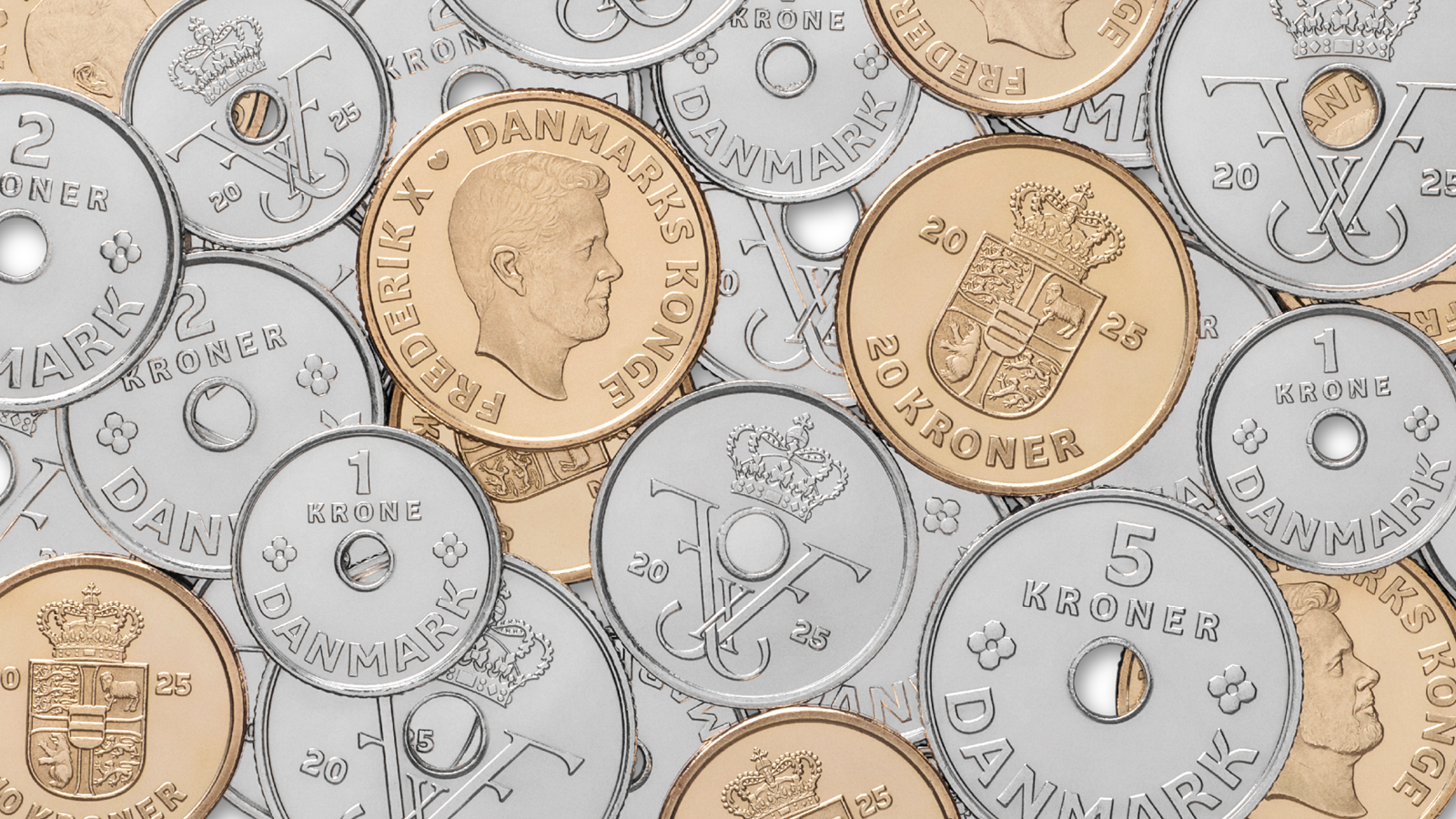
One key reality is monetary: Greenland uses the Danish krone, and Denmark’s monetary policy is built around exchange-rate stability against the euro through a long-standing fixed-exchange-rate regime. In practice, this means Greenland’s monetary conditions are already “imported” through Denmark’s framework, and indirectly shaped by Europe’s monetary environment.
On the fiscal side, the block grant from Denmark is not a detail: it is a load-bearing pillar. Danmarks Nationalbank notes the block grant is DKK 4.45 billion in the 2025 Finance Act, and quantifies its macro weight (including as a share of GDP and government revenue). Reuters reporting on additional Danish funding also references an annual block grant in the neighborhood of DKK 4.3 billion. [Read more]
So Greenland is already inside a system: currency and fiscal transfers tie it to Denmark, even as the political imagination pulls toward autonomy.
That is why the thought experiment "what if Greenland joins the dollar?" is not a quirky monetary side quest. It is a direct probe into sovereignty, dependency, and the mechanics of influence.
What "joining the dollar" actually means (and why it matters)
Joining the dollar can describe three different worlds:
-
Unofficial dollarization: USD becomes common in contracts, tourism, or a minerals/defense corridor, while the krone remains the formal anchor.
-
Bimonetary reality: USD is legally tolerated alongside the krone, and large parts of the economy start thinking in dollars.
-
Formal dollarization ("no separate legal tender"): the USD becomes the sole legal tender, and Greenland effectively surrenders independent monetary policy by design.
The third scenario is the most dramatic - and the most clarifying - so let’s treat it as the "stress test". The IMF is explicit that regimes with no separate legal tender imply the complete surrender of independent control over domestic monetary policy. [Read more]
That sounds technical. In real terms, it changes five things that matter immediately.
1) You trade monetary flexibility for credibility you may not actually need
In many countries that dollarize, the goal is to import credibility after a history of inflation, currency crises, or monetary disorder. Greenland is not Ecuador in 1999. It does not have a domestic currency collapse to escape. It already operates under an imported credibility umbrella (DKK anchored via Denmark’s euro-pegged regime).
So the classic “benefit” of dollarization, disinflation credibility, arrives with far less incremental value than it would in a crisis-prone emerging market. The island might gain some convenience for USD-priced sectors, but it would not be curing a chronic monetary disease.
In exchange, it would permanently hard-code policy dependence on the US business cycle and US rates - whether Greenland is booming, freezing, or bleeding population.
2) You introduce currency mismatch risk into the state’s bloodstream
Here is the most practical headache: the block grant and many state relationships are krone-denominated.
If Greenland’s expenditures, banking deposits, and pricing shift to USD while major inflows remain in DKK, the public sector inherits a currency mismatch. Suddenly, the krone-dollar exchange rate becomes a fiscal variable. That is a new and avoidable volatility channel, especially for a small administration funding healthcare, infrastructure, education, and logistics across extreme geography.
To neutralize that mismatch, Denmark would have to agree to restructure transfers into USD (politically loaded), or Greenland would need to accumulate substantial USD buffers (costly), or it would accept periodic fiscal stress when FX moves against it (socially destabilizing).
3) You lose seigniorage and make your financial safety net thinner
Dollarization typically transfers seigniorage (the revenue associated with issuing currency) to the issuer of the adopted currency. The IMF describes this as a clear cost in the full-dollarization tradeoff set.
But the deeper issue is not the profit on notes. It is the lender-of-last-resort constraint.
Under dollarization, a monetary authority cannot simply create domestic liquidity in a crisis. IMF work on dollarization highlights that the ability to act as lender of last resort is impaired relative to having your own currency, and that banking-system support becomes structurally more constrained.
For a small economy with high import dependence and logistical fragility, this matters disproportionately. If a bank run starts, you do not print your way out. You either have reserves, a credible external credit line, or you triage.
This is not theoretical. Even in non-dollarized countries, the ability to provide liquidity insurance is central to what modern central banking does. Bank for International Settlements Dollarization reduces that insurance unless you build a substitute architecture.
4) You reframe trade exposure: less Europe-by-default, more US-by-assumption
With the krone framework, Greenland’s monetary conditions are tied into a Europe-oriented anchor. A USD regime pushes the“default pricing, contracting, and financial thinking toward the US sphere.
If Greenland’s future growth story is positioned around US defense spending, US strategic logistics, and USD-priced minerals, this may look coherent on paper. But it also risks turning Greenland into a single-corridor economy: one dominant external patron, one dominant currency, one dominant set of political expectations.
And that is exactly where the boundary between natural globalization and coercive globalism becomes visible.
Natural globalization is trade, knowledge exchange, and mutual benefit emerging from comparative advantage. Globalism, at its worst, is the use of institutional, financial, and security leverage to reduce another society’s optionality while insisting it is “partnership.”
Currency is optionality. Giving it away is not a neutral modernization step. It is a long-term alignment decision.
5) Dollarization would become a geopolitical signal, not merely a monetary choice
You cannot meaningfully discuss formal dollarization for Greenland without acknowledging what it would communicate:
-
to Denmark: a strategic decoupling attempt, even if sovereignty remains formally unchanged;
-
to Europe: an Arctic asset drifting toward a different political center of gravity;
-
to the US: an invitation to treat Greenland as an integrated strategic space rather than a friendly foreign territory.
This is why Trump’s renewed Greenland push is less about the feasibility of annexation, which remains remote, and more about the ongoing contest over control mechanisms.
A base is a mechanism. A minerals licensing regime can be a mechanism. A currency is a mechanism.
The likely outcome: not “"Greenland joins the dollar", but "the dollar joins Greenland"
The most plausible near-term scenario is not formal dollarization. It is selective dollarization: USD-denominated projects, defense-linked procurement, mineral contracts, and external financing that gradually normalize the dollar as the currency of strategic sectors.
That kind of partial shift can happen without a referendum, without a dramatic legal rupture, and without a headline that triggers immediate diplomatic escalation. It is also exactly the type of incremental reality change that transforms sovereignty from a legal statement into a negotiated constraint.
If Greenland ever truly moved to the USD as sole legal tender, it would need a full plan for:
-
converting the public sector accounts and contracts;
-
creating a robust USD liquidity backstop (reserves + external lines);
-
renegotiating the transfer framework with Denmark to avoid fiscal FX mismatch.
Absent that, "joining the dollar" would not look like modernization. It would look like exchanging one dependency structure for another: likely sharper, more geopolitical, and less forgiving.